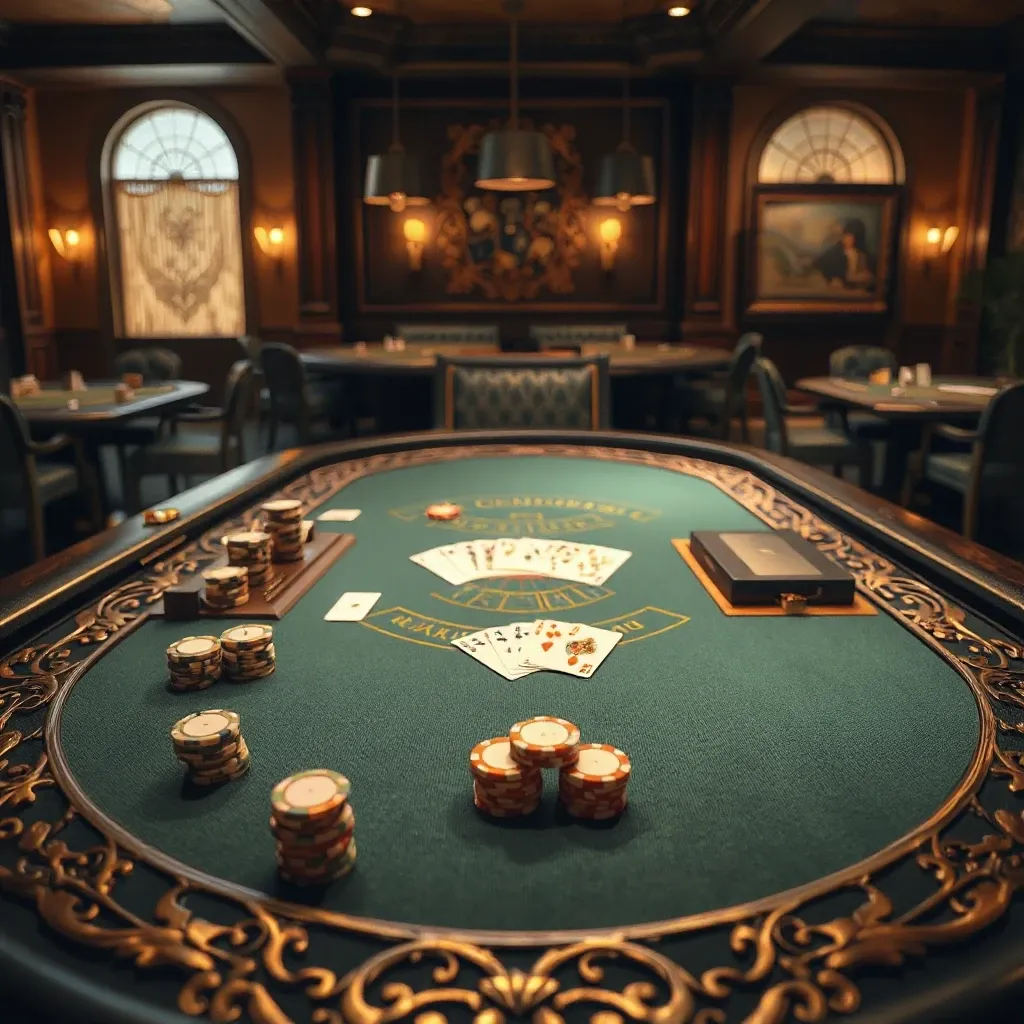
Blackjack, a staple in casinos worldwide, continues to captivate players with its unique blend of chance, strategy, and a sense of control that few other games offer. It’s more than just a game of luck; blackjack empowers players to make decisions that directly influence the outcome, setting it apart from purely luck-based games. With years immersed in the world of casino games, we’ve witnessed firsthand the enduring appeal of blackjack and its evolution over time.
Blackjack thrives because it isn’t solely about the cards dealt. Skillful players use strategy to minimize the house edge, making informed decisions about hitting, standing, doubling down, and splitting pairs. While luck plays a role in the cards you receive, strategic play elevates blackjack beyond a simple gamble, transforming it into a game where knowledge and calculated risks can significantly impact your odds.
A Brief History of Blackjack
Blackjack, a staple in casinos worldwide, boasts a captivating history rooted in chance and strategy. Its story begins, arguably, in the bustling gambling houses of 17th-century France. Two French card games, “Chemin de Fer” and “French Ferme,” are often cited as direct ancestors. However, the most immediate precursor was “Vingt-et-Un” (Twenty-One), a game popular among the French nobility. This early version shared the core objective of reaching a total card value of 21 without exceeding it, a concept that remains central to modern blackjack.
The game’s journey across the Atlantic marked another pivotal moment. Brought to America, “Vingt-et-Un” initially struggled to gain traction in the nascent gambling scene. To boost its appeal, gambling halls introduced various bonus payouts. One such bonus, offering a payout for holding the Ace of Spades and a black Jack (either the Jack of Clubs or Jack of Spades), is rumored to be the origin of the name “Blackjack.” While the bonus payout was eventually discontinued, the name stuck, forever linking the game to its American introduction.
Over time, blackjack evolved from a simple pastime into a sophisticated casino game. It become more popular after mathematicians and gambling experts began analyzing the game and publishing betting strategies in the mid-20th century, transforming blackjack from a game of pure chance into one where skilled and informed players could improve their odds, solidifying its place in casino history.
The Allure of Skill: Basic Blackjack Strategy
Blackjack distinguishes itself from many casino games through the element of strategy. It’s not solely about luck; wise decision-making can give players an edge. By learning and applying a basic blackjack strategy, you move beyond being a passive gambler and start influencing the game’s outcome.
At its core, basic blackjack strategy is a set of mathematically optimal plays for every possible situation at the table. It tells you the best action to take – whether to hit, stand, double down, or split pairs – based on your hand and the dealer’s visible upcard. This strategy has been developed through extensive computer simulations, providing the highest possible return to player (RTP).
A visual aid often employed by blackjack players is the basic strategy chart. These charts map out all hand combinations against each dealer upcard, providing a quick reference guide for optimal play. While memorizing the entire chart is beneficial, understanding the underlying logic is equally important.
For instance, the strategy often suggests hitting when holding a low total like 12 against a dealer’s strong upcard (7 or higher), as the risk of busting is lower than the dealer making a strong hand. Conversely, standing is usually recommended when holding a stiff hand (12-16) against a dealer’s weak upcard (2-6), hoping the dealer will bust. Knowing when to double down (typically on a hard 11 or a 10 against a dealer’s upcard of 9 or less) and split pairs (like splitting aces and eights) are other critical components of the basic strategy. Not every hand is ideal, but playing each hand by the numbers will get you close to optimal play.
Consistently following basic strategy is arguably the most vital step any player can take to maximize their chances of winning at blackjack and minimize the house edge. It’s a disciplined approach that transforms blackjack from a game of pure chance into a game of calculated risk.
Why the House Edge Matters (and How to Reduce It)
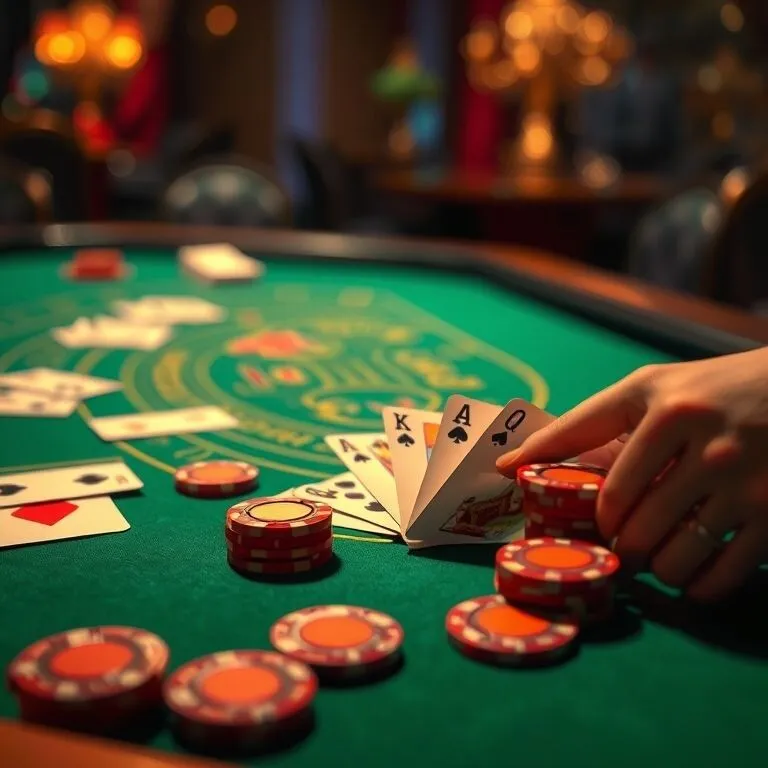
For anyone serious about playing blackjack, understanding the house edge is absolutely essential. The house edge represents the casino’s statistical advantage in any game – it’s the percentage of each player’s wager that the casino expects to win over the long run. Ignoring this crucial aspect is like navigating without a map; long-term success at the blackjack table hinges on knowing, and minimizing, the house edge.
Blackjack, unlike some casino games, offers skilled players a real opportunity to significantly reduce the house edge. While games like roulette or slots have fixed odds, blackjack’s dynamic nature allows players to influence the outcome through strategic decision-making. The most important way to diminish the house edge is mastering basic strategy. By consistently making the mathematically correct play in every situation, a player can lower the house edge to below 1% in some game variations.
Compared to other popular casino table games, blackjack often boasts a lower house edge, especially when played with optimal strategy. Games like craps and baccarat can have varying house edges depending on the specific bets placed, and roulette’s house edge is generally higher than blackjack’s due to the presence of one or two zero pockets on the wheel. Furthermore, advanced techniques like card counting, considered advantage play, can potentially even shift the edge in the player’s favor, although casinos actively discourage this practice. The return to player (RTP) rate is a key concept to grasp, since it shows how much money a player is expected to win back from a casino game, but it does not guarantee a positive long term outcome.
Blackjack vs. Other Casino Games: A Comparative Analysis
When stepping into a casino, the sheer variety of games can be overwhelming. However, understanding the nuances of each game is crucial for making informed decisions and potentially improving your odds. Blackjack, with its blend of skill and luck, stands apart when compared to other popular casino offerings like roulette, slots, and poker.
Roulette and slots represent the epitome of games based purely on chance. In roulette, a ball’s landing spot on the wheel determines the outcome, leaving absolutely no room for player strategy. Similarly, slot machines rely on random number generators, making each spin independent of the last and impervious to any player input. These games boast a higher house edge compared to blackjack, meaning the casino statistically wins more often in the long run.
Poker, on the other hand, introduces a layer of competition absent in blackjack. Instead of playing against the house, poker pits players against each other, where skill, bluffing, and reading opponents become paramount. Unlike blackjack, where knowing basic strategy can significantly reduce the house edge, poker requires a deeper understanding of game theory and psychology to consistently succeed.
Blackjack occupies a unique middle ground. While luck undeniably plays a role in the cards you are dealt, skillful decision-making regarding hitting, standing, doubling down, and splitting can dramatically influence the outcome. By employing basic strategy, players can lower the house edge to a more favorable percentage, making blackjack a more appealing option for those who prefer some control over their gambling destiny. Mastering blackjack strategy involves memorization and adapting to the changing game dynamics, offering a greater sense of agency than purely luck-based games.
The Psychology of Blackjack: Why We Love the Game
Blackjack’s enduring appeal extends far beyond just the potential for monetary gain. It taps into fundamental aspects of human psychology, creating a compelling and sometimes addictive experience. One of the most significant factors is the illusion of control. Unlike pure games of chance, blackjack allows players to make decisions that directly influence the outcome, fostering a sense that skill and strategy can overcome the inherent randomness.
The thrill of risk-taking is another powerful motivator. The tension of whether to hit or stand, the anticipation of the dealer’s reveal – these moments trigger the release of dopamine, the brain’s reward chemical, creating a pleasurable sensation that reinforces the desire to play more. Furthermore, blackjack uniquely balances risk and reward. The game promises potentially high payouts for a relatively low initial stake, giving it a strong appeal for risk-inclined individuals.
Understanding concepts like loss aversion and the gambler’s fallacy is crucial for responsible play. Loss aversion describes our tendency to feel the pain of a loss more acutely than the pleasure of an equivalent gain. The gambler’s fallacy is the mistaken belief that past events influence independent random events. Players who grasp these cognitive biases can better manage their emotions and make more rational decisions. Recognizing the psychological forces at play empowers players to enjoy the game without falling prey to its potential pitfalls, fostering a healthier and more controlled relationship with blackjack.

Bankroll Management: Playing Smarter, Not Harder
Blackjack offers moments of thrill and strategic depth, but without proper bankroll management, those moments can be fleeting and costly. Bankroll management is not just about limiting losses; it’s about extending your playtime, weathering inevitable downswings, and ultimately, enjoying a more sustainable and responsible gambling experience. Think of it as the cornerstone of any blackjack strategy, the foundation upon which all your card counting and betting systems are built.
The first step in mastering bankroll management is setting a gambling budget. This isn’t just an arbitrary number; it’s a predetermined amount of money you’re comfortable losing without impacting your financial stability or lifestyle. Once you’ve established this budget, treat it like a non-negotiable limit. Avoid the temptation to dip into other funds or rationalize exceeding your budget. This disciplined approach is crucial for maintaining control.
A key element of sound bankroll management lies in understanding risk management. This means betting a small percentage of your total bankroll on each hand. A generally accepted guideline is to wager no more than 1-2% of your bankroll per bet. This conservative approach minimizes the impact of losing streaks and allows you to stay in the game longer. Avoid the urge to increase your bets in an attempt to quickly recover losses, as this can often lead to even greater financial setbacks.
Responsible gambling is at the heart of effective bankroll management. It’s about recognizing that blackjack should be a source of entertainment, not a means to financial gain. Be aware of the signs of problem gambling, such as chasing losses, betting more than you can afford, or neglecting other responsibilities. If you find yourself struggling with these issues, seek help from a gambling support organization. Remember, playing smart with your bankroll ensures that blackjack remains a fun and engaging activity, rather than a path to financial distress.
The Future of Blackjack: Online and Beyond
Blackjack, a casino staple for decades, is experiencing a fascinating evolution, largely driven by technology. The future of blackjack undeniably lies in the digital realm, with online platforms offering unprecedented accessibility and convenience. Players can now enjoy their favorite game from the comfort of their homes, or on the go, thanks to the proliferation of mobile blackjack apps and websites.
One of the most significant developments has been the rise of live dealer blackjack. This format bridges the gap between the traditional casino experience and online play. Live dealer games feature real human dealers streamed in real-time, dealing actual cards. This provides a more immersive and social experience compared to traditional online blackjack, attracting players who crave authenticity.
Looking ahead, technology promises even more exciting innovations. Virtual Reality (VR) and Augmented Reality (AR) could revolutionize the way blackjack is played, creating incredibly realistic and interactive casino environments. Furthermore, expect to see the continued introduction of new side bets and rule variations designed to keep the game fresh and engaging for both seasoned players and newcomers alike. The future of blackjack is dynamic, adaptive, and poised to captivate players for years to come.
Conclusion
Blackjack’s continued popularity is a testament to its unique blend of skill, chance, and historical significance. Unlike many casino games solely reliant on luck, blackjack offers players a degree of control, demanding strategic thinking and calculated decision-making.
From its humble beginnings in French gambling houses to its current status as a casino staple, blackjack has captivated players with its simple yet engaging gameplay. The game’s rules are easy to learn, allowing newcomers to quickly grasp the basics, while the strategic depth provides seasoned players with endless opportunities to refine their skills.
Throughout this exploration, we’ve uncovered the core strategies like basic strategy, delved into the psychological aspects of the game, and touched upon the importance of bankroll management. Mastering these elements not only enhances your chances of winning but also enriches your overall experience.
Blackjack is more than just a game; it’s a mental exercise, a social activity, and a journey through gambling history. Whether you’re a casual player or a serious gambler, blackjack offers something for everyone. Its lasting appeal lies in its ability to challenge and entertain, solidifying its place as a true casino classic.